4 Aug 2026
Design Overlaps in Reel-Based Slots and Live Dealer Features for UK Mobile Users
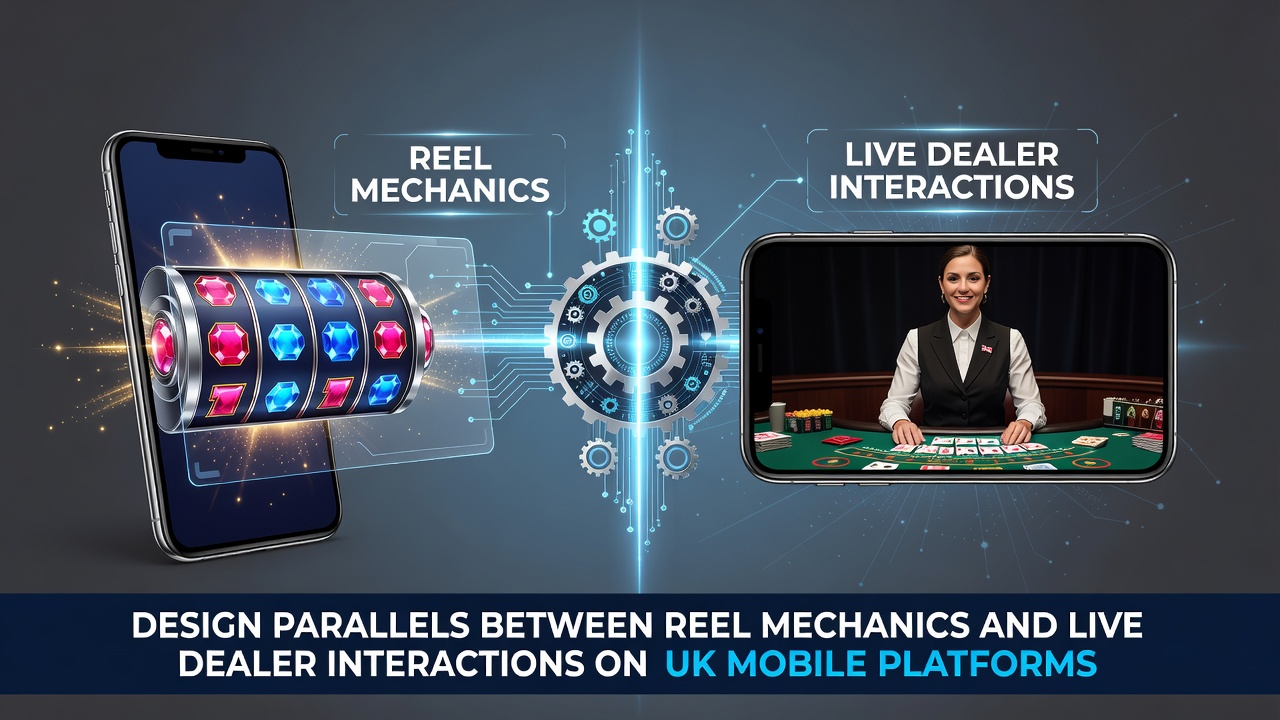
UK mobile platforms have developed reel mechanics in slots that share core interaction patterns with live dealer sessions, creating consistent user flows across both formats. Reel spins rely on timed animations, random number generators, and swipe gestures, while live dealer tables use similar timing cues, camera feeds, and tap-based decisions to guide players through rounds.
Core Elements of Reel Mechanics on Mobile
Slot reels on UK apps present symbols that align through spinning sequences controlled by software algorithms, and developers incorporate touch-responsive buttons that trigger spins with immediate visual feedback. These mechanics extend to bonus rounds where players tap to stop reels or select positions, mirroring decision points found elsewhere. Data from mobile usage reports shows sessions often last between five and fifteen minutes, during which reel cycles repeat at intervals that maintain attention without overwhelming the interface.
Animation speeds adjust based on device performance, with faster loads on newer models and smoother transitions that reduce lag during extended play. Observers note that these adjustments create predictable rhythms, allowing users to anticipate outcomes while the underlying code ensures fairness through certified random processes.
Live Dealer Interaction Structures
Live dealer games on the same platforms stream real-time video of tables where dealers manage cards or wheels, and players respond through on-screen controls that accept bets or choices within set windows. The interface layers camera views with betting panels that update dynamically as rounds progress, and touch inputs register selections instantly to sync with the dealer pace. Studies from the Australian Gambling Research Centre indicate that mobile live dealer participation has grown alongside improvements in video compression, which keeps streams stable even on variable networks.
Timing elements play a central role here too, since betting intervals mirror the spin durations in slots, giving players comparable windows to act. Audio cues from the table environment add another layer, yet the visual hierarchy remains focused on the central action area to reduce distraction during mobile use.
Shared Design Principles Across Formats
Both reel systems and live dealer setups employ progressive disclosure, revealing information step by step to avoid clutter on smaller screens. Reel grids expand into feature screens after certain alignments, while dealer tables reveal card results or wheel outcomes through sequential animations. This approach keeps primary controls visible and secondary options tucked behind taps, a pattern researchers at the University of Nevada, Las Vegas have documented in mobile gambling interface analyses.
Touch target sizing follows similar guidelines in each case, with buttons large enough for thumb operation yet spaced to prevent accidental presses. Color contrasts highlight active areas during key moments, such as winning lines on reels or valid betting zones at tables, and these visual signals draw from the same accessibility standards applied across UK platforms.
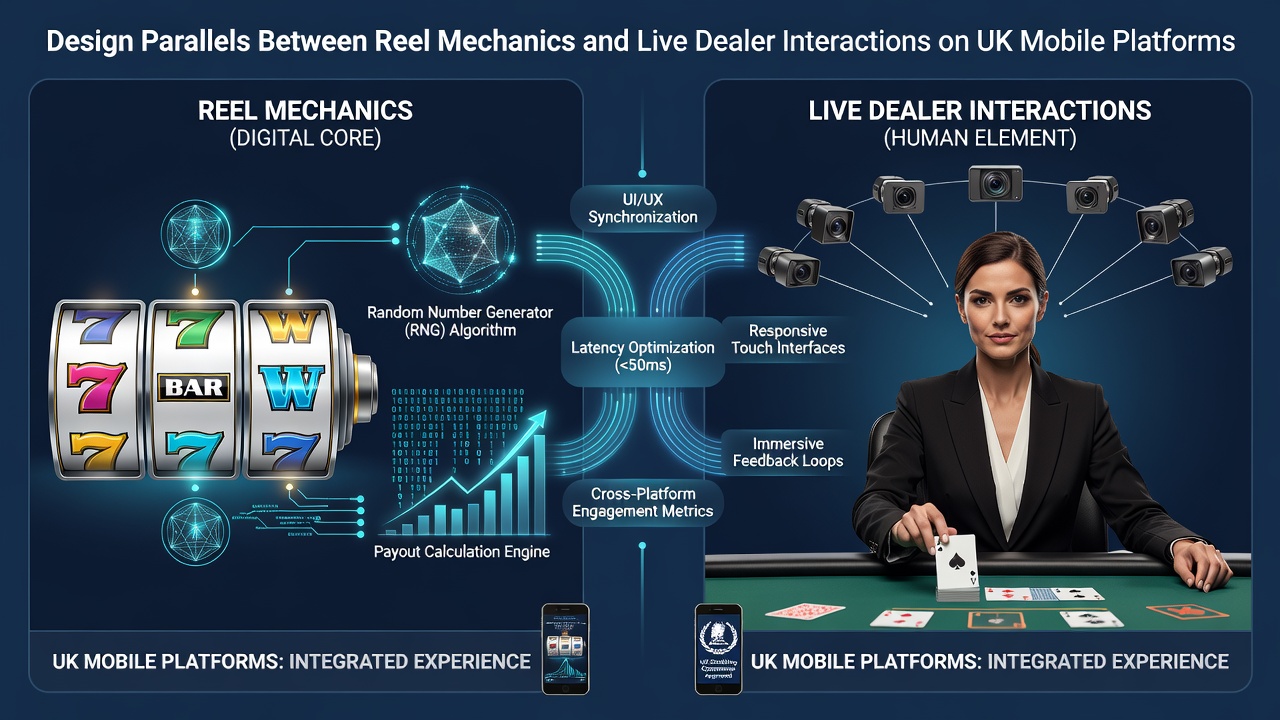
Feedback loops operate in parallel as well. A reel stop produces immediate symbol checks and payout displays, just as a dealer reveal triggers chip movements and balance updates. Developers coordinate these responses so the delay between action and result stays consistent, which helps users transfer familiarity from one game type to the other without relearning controls.
Mobile-Specific Adaptations in 2026
By August 2026, UK mobile developers had refined portrait-mode layouts that accommodate both vertical reel columns and compact dealer views without requiring rotation. Battery optimization routines limit background video processing in live streams while preserving reel animation quality, and network-adaptive streaming adjusts dealer feed resolution to match slot asset loads. These changes emerged from iterative testing that compared session data across device generations.
Cross-format navigation menus now appear in both game types, allowing quick switches between reel libraries and live tables while preserving current balance and bet settings. The result is a unified experience where users move between mechanical spins and human-led rounds using the same gesture vocabulary.
Conclusion
Design choices in reel mechanics and live dealer interactions on UK mobile platforms converge around timing, touch response, and visual hierarchy. These overlaps support seamless transitions for players moving between automated and streamed content, with technical refinements continuing to align performance across formats. The patterns reflect broader mobile interface standards that prioritize clarity and responsiveness on compact displays.