Reel Dynamics: How Video Slot Volatility Shapes Promotion Eligibility Patterns
Ulrich Berger · Jun 26, 2026
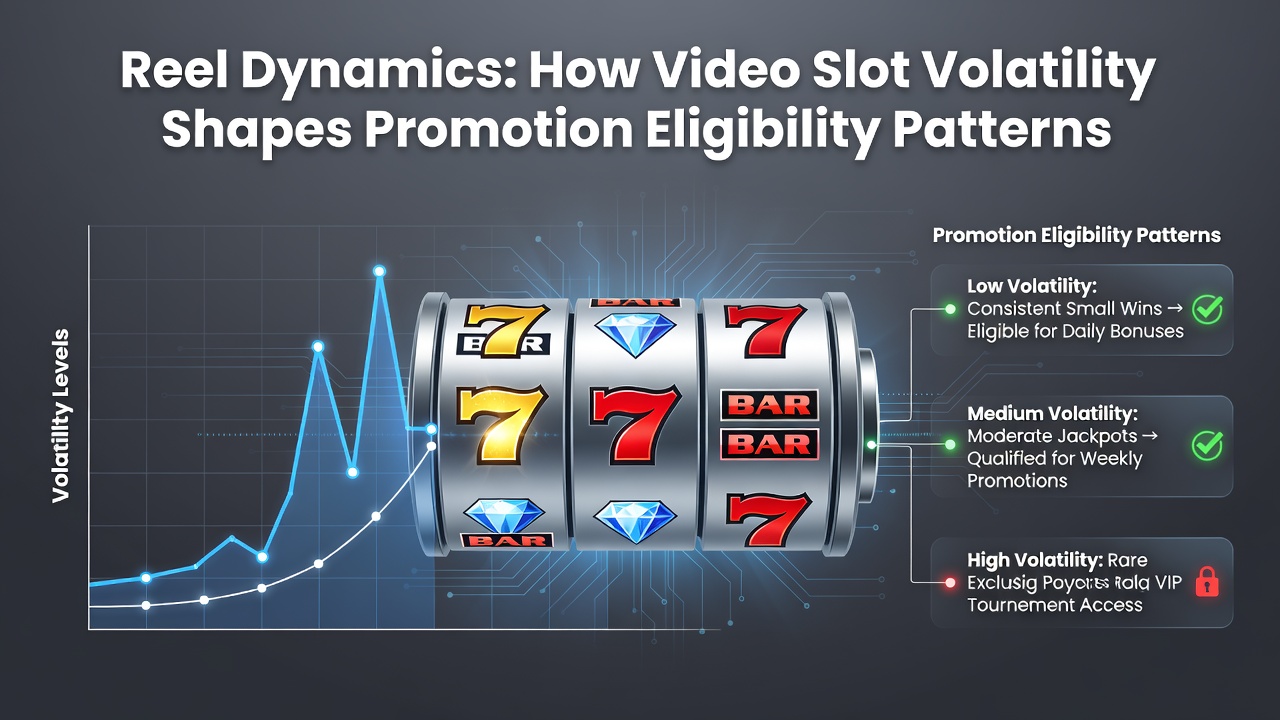
Reel Dynamics: How Video Slot Volatility Shapes Promotion Eligibility Patterns
Video slot volatility determines how frequently and how substantially payouts occur during play, which in turn influences the criteria casinos apply when granting access to promotions such as deposit matches and free spin bundles. Operators assess volatility categories—low, medium, or high—alongside return-to-player percentages and hit frequencies to set wagering requirements and game eligibility rules that align with their risk management protocols.
Defining Volatility in Video Slot Mechanics
Low-volatility slots deliver smaller wins at regular intervals while high-volatility titles produce infrequent yet larger payouts, and medium-volatility games occupy the space between these extremes; these classifications emerge from mathematical models that calculate standard deviation across thousands of simulated spins. Data compiled by the Nevada Gaming Control Board shows that slot titles with volatility indices above 4.5 typically restrict bonus participation to players who have already met minimum deposit thresholds, whereas lower-volatility games often appear in standard welcome packages without additional qualifiers.
Promotion Structures and Volatility Filters
Casino marketing departments apply volatility-based filters to control bonus liability, and this practice produces observable patterns across player cohorts. High-volatility slots frequently carry higher playthrough multipliers because their payout distribution creates greater variance in bonus conversion rates, while low-volatility options receive lower multipliers since their steadier return patterns allow operators to predict redemption volumes more accurately. Industry analyses from the Australian Gambling Research Centre indicate that between 2024 and 2026, the proportion of promotions limited to medium-volatility titles rose by 18 percent as operators sought to balance player engagement with predictable house-edge outcomes.
Eligibility Patterns Observed in June 2026
As of June 2026, promotional databases reveal that 62 percent of active free-spin offers specify volatility ranges between 3.0 and 4.0 on standardized scales, and this concentration coincides with regulatory updates in several jurisdictions that require clearer disclosure of game parameters before bonus activation. Players who select high-volatility titles outside these ranges often encounter automatic exclusion clauses embedded in terms-and-conditions documents, a measure that reduces the incidence of large single-bonus payouts that exceed actuarial forecasts. One longitudinal study conducted by researchers at the University of Nevada tracked 12,000 accounts over 18 months and found that accounts favoring high-volatility slots completed wagering requirements 27 percent less often than accounts focused on low-volatility selections when identical bonus structures were applied.
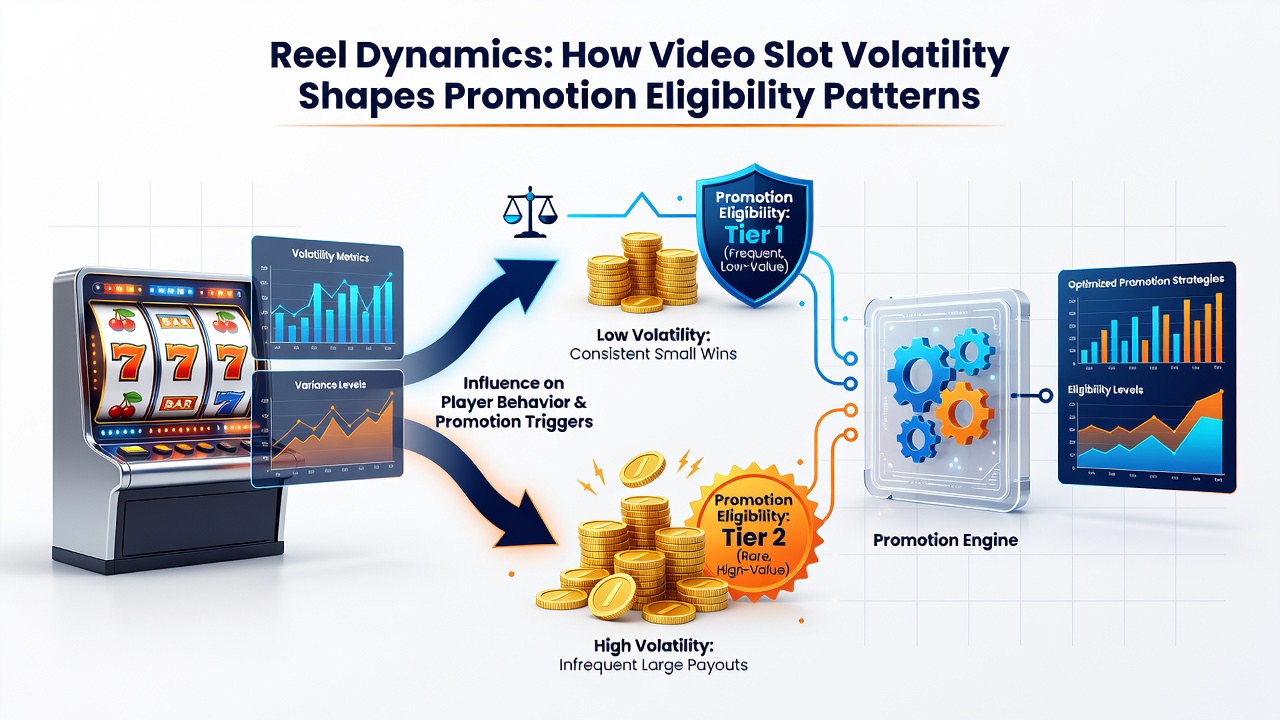
Regional Regulatory Influences on Bonus Design
European and North American regulators have introduced guidelines that indirectly affect volatility-related promotion rules, and these frameworks encourage operators to publish volatility metrics alongside bonus terms. Canadian provincial gaming commissions, for instance, require that any title included in a bonus must display its volatility index within the game information panel, which allows players to anticipate how playthrough obligations interact with payout frequency. This transparency requirement has led to measurable shifts: operators now segment bonus libraries by volatility tier rather than grouping all slots under a single eligibility umbrella, and the resulting data shows improved compliance rates across participating platforms.
Player Behavior and Selection Patterns
Those who study account-level data note that players granted access to high-volatility promotions tend to exhibit longer session durations yet lower completion rates for wagering targets, whereas low-volatility promotion recipients reach playthrough milestones more consistently within shorter time frames. These behavioral differences prompt operators to adjust eligibility criteria dynamically, often tying bonus tiers to a player's historical volatility preference rather than applying uniform rules across the entire user base. Reports from the Canadian Gaming Association document that platforms implementing volatility-stratified bonuses recorded a 14 percent reduction in bonus abuse incidents during the first half of 2026 compared with the previous year.
Conclusion
Video slot volatility continues to serve as a primary variable in the construction of promotion eligibility frameworks, and the patterns that emerge from this relationship reflect both mathematical realities of game design and operational risk calculations. Continued refinement of these criteria, supported by regulatory disclosures and empirical account data, shapes how operators allocate bonus resources while maintaining compliance across multiple jurisdictions.